

Anthropologist Caroline Bazambanza examines how Black women make sense of racial inequality in maternity care – and why their knowledge is too often ignored.
Caroline Bazambanza completed her undergraduate degree in the same year that MBRRACE UK reported Black women in Britain were five times more likely than white women to die during childbirth or in the year after.
Caroline, whose studies had increasingly focused on reproduction, was struck by the force of this statistic. It spoke in the generic language of risk and probability, but said little about Black women’s real experiences or how they understood and navigated this heightened risk.
“As a Black woman myself, I was intrigued that there are hardly any Black anthropologists in this country who work with Black people,” says Caroline, who has joined the Department of Social Anthropology as Postdoctoral Research and Teaching Associate. “I wondered what my own positionality might enable me to find out."
These questions came into sharper focus as Caroline worked on the LSE’s COVID and Care project during a period of profound upheaval. Britain’s maternity services were under intense strain, exacerbated by the pandemic. The murder of George Floyd ignited a global movement that pushed racial inequalities – including those in maternal healthcare – into public view.
It was within this charged moment that Caroline’s research took shape – not as an attempt to produce more data, but to better understand how Black women themselves interpreted it.
Beyond data
Today, Black women in the UK continue to face poorer outcomes in maternity care than other groups.
“There are so many inequalities,” Caroline explains. "Black women are more likely to experience miscarriage, emergency caesareans or other interventions. They're more likely to die or experience near misses."
"But they're also more likely to be referred to social services or experience family separation. Their children are more likely to be expelled from school. There's a bounty of evidence showing the disproportional adversity that affects Black women and their families.”
Research also documents persistent feelings among Black women of being overlooked, ignored, treated with disrespect, dehumanised, not taken seriously or stereotyped within healthcare settings.
Anthropology of listening
In 2021, Caroline began more than two years of fieldwork in London. She spent time primarily with Black mothers, but also with midwives, doulas and medical students, listening to their perspectives to better understand their experiences.
Her network grew organically through women’s social groups, antenatal classes, Instagram communities or online spaces such as Mumsnet. Most meetings took place outside medical or clinical locations: hanging out with mums in their homes, at community groups, parks or museums.
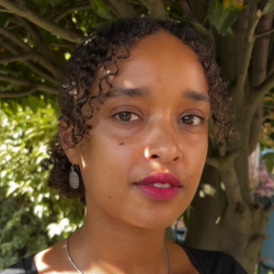
“I formed close relationships with around 16 women, their families and friends, but I heard from hundreds,” she says. “I was working with numerous groups interested in hearing Black women’s voices in response to public or private commissions, including the Birthrights Inquiry and the Motherhood Group.”
“My mission was not to fact find, but to listen and think about the transformative nature of these experiences and narratives,” she explains.
She credits her training as a doula, a role that centres on presence and attentive listening to a mother’s desires and needs during birth. This approach is often contrasted with the task-driven demands placed on clinical professionals such as midwives. While Caroline could not practise alongside her research, the principles of her training informed her engagements.
“Listening,” she says, “is as much about what's not said or how something is articulated. What am I hearing that might be otherwise inaudible or unsayable?”
Knowledge in use
Caroline encountered women keen to speak anonymously about their birth experiences, analysing what had happened and how they felt. Most had rarely been offered this opportunity. She found women who were deeply informed about their bodies, lives and histories. The statistics only provided evidence of what they already knew – that healthcare systems and institutions continue to perpetuate racial injustice in reproductive care.
Centring knowledge, Caroline uses the term scepticism to describe how Black women appraise information, including what is presented as fact by medical professionals. Far beyond the vague sense that something is ‘off’, scepticism harnesses evidence and experience to challenge what is “knowable, graspable or true”.
In one example, a healthy woman with no identified risk factors, underwent prolonged labour that ended in an emergency C-section. She was told the procedure was necessary because her pelvis was “too small”. Later, she learned that women of African descent are five times more likely to have an emergency C-section over an instrumental birth, prompting her to question whether her pelvis had ever been the issue. Scepticism names this process of evaluation.
Knowledge can also lead to anticipation about treatment within healthcare institutions. Caroline describes a woman who chose a home birth because she knew the risks of abuse, microaggressions, and other harms in hospital care. At home, attended by NHS midwives, her mother and sister could also be present. She took subtle control over the birth, directing midwives when needed and using her family as advocates to ensure her birth plan was respected.
Caroline explains: “My thesis title, The More we Know, refers to this idea that Black women inhabit the reproductive landscape with a wealth of knowledge that bestows no guarantee of fair or safe treatment, and they put that knowledge to use.”
Historical memory
Research has repeatedly shown that Black women and their families are often blamed for the disparities in maternal outcomes, with explanations focused on poverty, poor health or lack of education. Caroline points to the pandemic, when disproportionately negative outcomes for ethnic minorities were frequently attributed to overcrowding, misinformation or unhygienic practises.
“Often, the women I spoke to pointed to histories of injustice or abuse affecting Black women globally,” she says, including enslavement, medical experimentation, sterilisation, colonialism and family separation.
“People providing care might say that this horrible stuff from the past is gone and we're better today. But for many Black women, the past is not so bounded. It's incredibly porous and relevant to contemporary manifestations of inequality, racism or unjust care.”
Caroline draws on the work of historians and public figures during the Black Lives Matter resurgence, which highlighted how racism and racial histories in Britain are often silenced or unacknowledged.
Some women referenced historical abuses such as the 1932-1972 Tuskegee Syphilis Study in the US, when Black men were deceived and denied treatment. Others mentioned Marion Sims’ experimental operations on 19th-century enslaved Black women. There are also the now discredited, pseudo-scientific ideas once legitimised in medical journals, such as the belief that Black women feel less pain or give birth more easily.
“When Black women know these things have happened,” says Caroline, “it indicates that they could happen again, or could still be happening. These ideas are grounded by real historical and political events that have long sown seeds of scepticism.”
Workplace inequality
Caroline found that the same patterns of reproductive racial injustice affecting Black women outside medical settings were also impacting those within them.
Black women are, for example, much more likely to be referred to the Nursing and Midwifery Council’s Fitness to Practise process which could remove their right to work as a medical professional.
“This creates conditions of hypervigilance,” she explains. “Sometimes they feel they cannot or should not identify problematic, insensitive or racist behaviour for fear of being ostracised or branded as difficult.”
A widely cited historical example dates to the Windrush era when nurses – many from the Caribbean – were recruited to the NHS. They were often channelled into lower-grade qualifications that placed Black women in the lowest-paid and most precarious roles. Although these qualifications no longer exist, their effects continue to shape hierarchies within the NHS. Some officials now acknowledge how those decisions were structured by racist forces.
Whose knowledge counts?
Can the collective experience of Black women ever be recognised as legitimate knowledge? “There are people trying to make that happen,” Caroline says, pointing to the Birthrights Inquiry and the work of figures such as Mars Lord, and Sandra Igwe.
“It's difficult to come in with this experiential knowledge, sometimes polarising knowledge around racial injustice, and say something needs to change. When there are forms of knowledge that seem to be authoritative and accurate, how do you challenge that? Who do we consider legitimate sources of knowledge?”
For Caroline, the answer lies in more creative and imaginative approaches that take marginalised forms of knowledge seriously.
“I’ve taken the words and experiences of my interlocutors seriously,” she says, “to think about what risks we overlook when we attribute all outcomes to poverty, deprivation or lack of education – and what we might learn if think otherwise.”
Words: Joanne Dodd, Communications Coordinator, School of Humanities and Social Sciences, University of Cambridge
Lead image: 'Forwarding Power' collage by Caroline Bazambanza, representing how knowledge spreads through social networks, including online